Establishing UX at PEI 0→1
 Team of oneUser researchPrototyping
Starting as a UX team of 1
In 2019, I was a business development executive at PEI, selling their market insight platform to private equity funds and investors. Every day, I was hearing about issues with the product and needs that I didn't see being escalated further up the chain to product development.
I'd already decided that I wanted to transition from sales into UX but couldn't afford formal study, so had been reading, learning and practicing all I could during my evenings for almost a year by this point. I identified the problem, I believed that I had just enough skill, now I just needed to create the opportunity!
Opportunity
After pitching the idea to do some ongoing user research to various senior members of the product management and engineering teams – taking strong inspiration from the classic 90's hit film Jerry Maguire – I found an ally in the head of investor/fund research who shared my observations.
We pitched for a user researcher role to be created and a few months later, our wish was granted. Time to start building a UX function from the ground up!
My role
I started as a team-of-one, reporting to the head of investor/fund research as my line manager but given UX was not at all part of his skillset, I had a high level of autonomy and independence.
Establishing the baseline
Before this, PEI had not had a proper customer research-driven mapping of their customers' needs and contexts. So my first step was to run a discovery project to set this baseline.
I used SurveyMonkey to run a series of baseline surveys with our paid customers, initially starting with basic segmentation questions but then branching into their pain points, what they used PEI's products for, others they'd consider competitors and whether or not it had must-have value. This was a great starting point for buy-in of our insights with business stakeholders who valued large samples, and started to tell us some of the "what".
From there, I ran dozens of user interviews with customers from PEI's primary customer groups, with a representative split of fund managers, institutional investors and service providers.
Because these customers relied on PEI to be more effective at their jobs and so improving it was in their best interest, we didn't need to offer incentives. I asked participants to talk me through how they used PEI on a daily/weekly/monthly/annual basis and the pain points they'd experienced, trying to steer as clear as possible from direct recommendations and focussing on problems.
I synthesised these interview insights (the "why" and "how") with our online usage data in Google Analytics and used interview recordings and personas to tell the story to stakeholders – yes, this was back when personas were highly regarded and considered a helpful simplification.
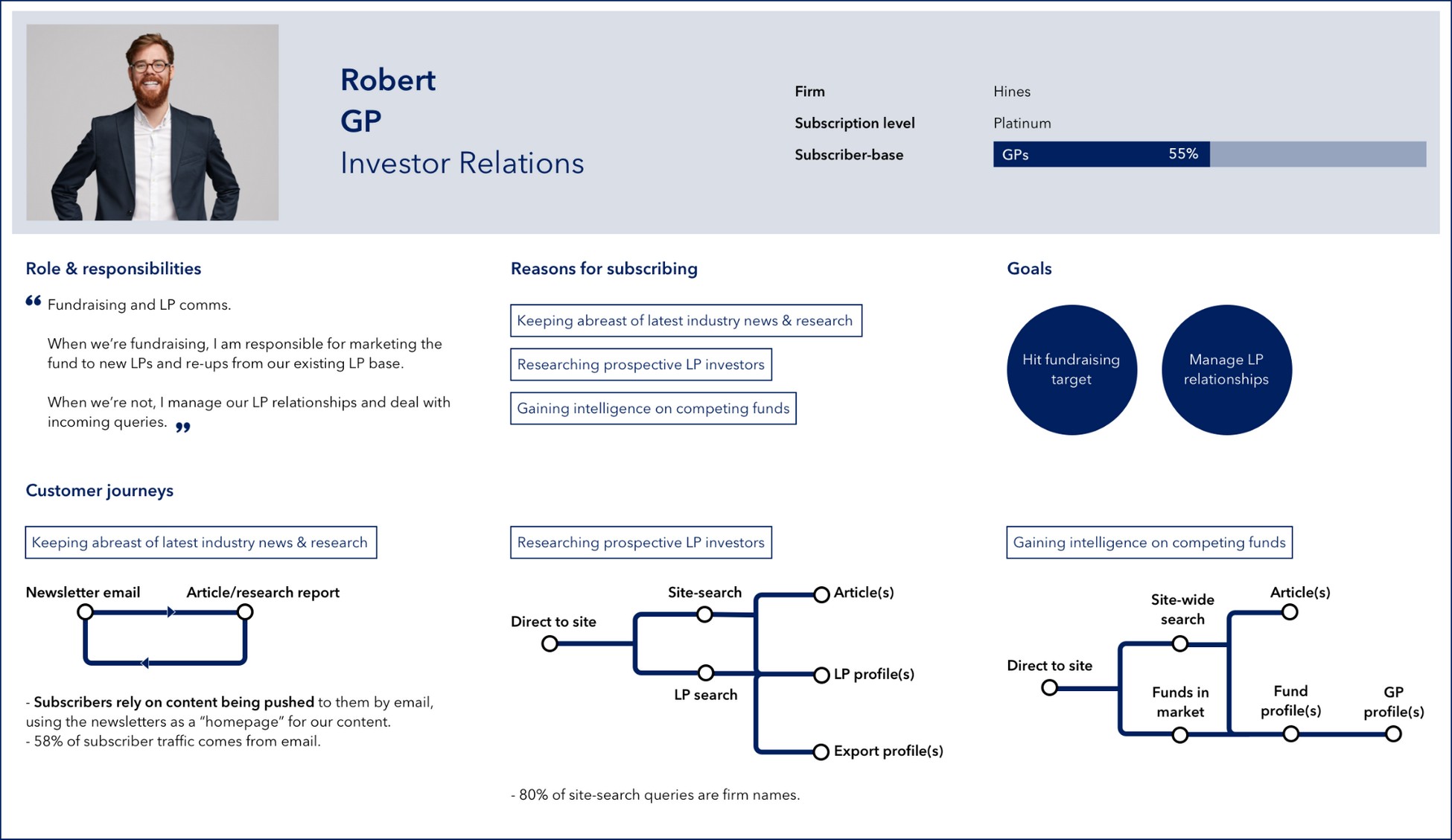
Establishing this baseline gave me the buy-in to run many more research projects on new product propositions and feature prototypes, before eventually hiring a second member of the team to boost capacity to fit the new demand for good UX and customer insight.
Case study: Testing a new business model
Challenge
Due to covid-19, PEI's conference business was unable to continue in-person so we looked at a membership model as an alternative.
My task
- Develop a membership product concept that addresses customer needs and pain points of LPs (limited partners), discovered in prior research.
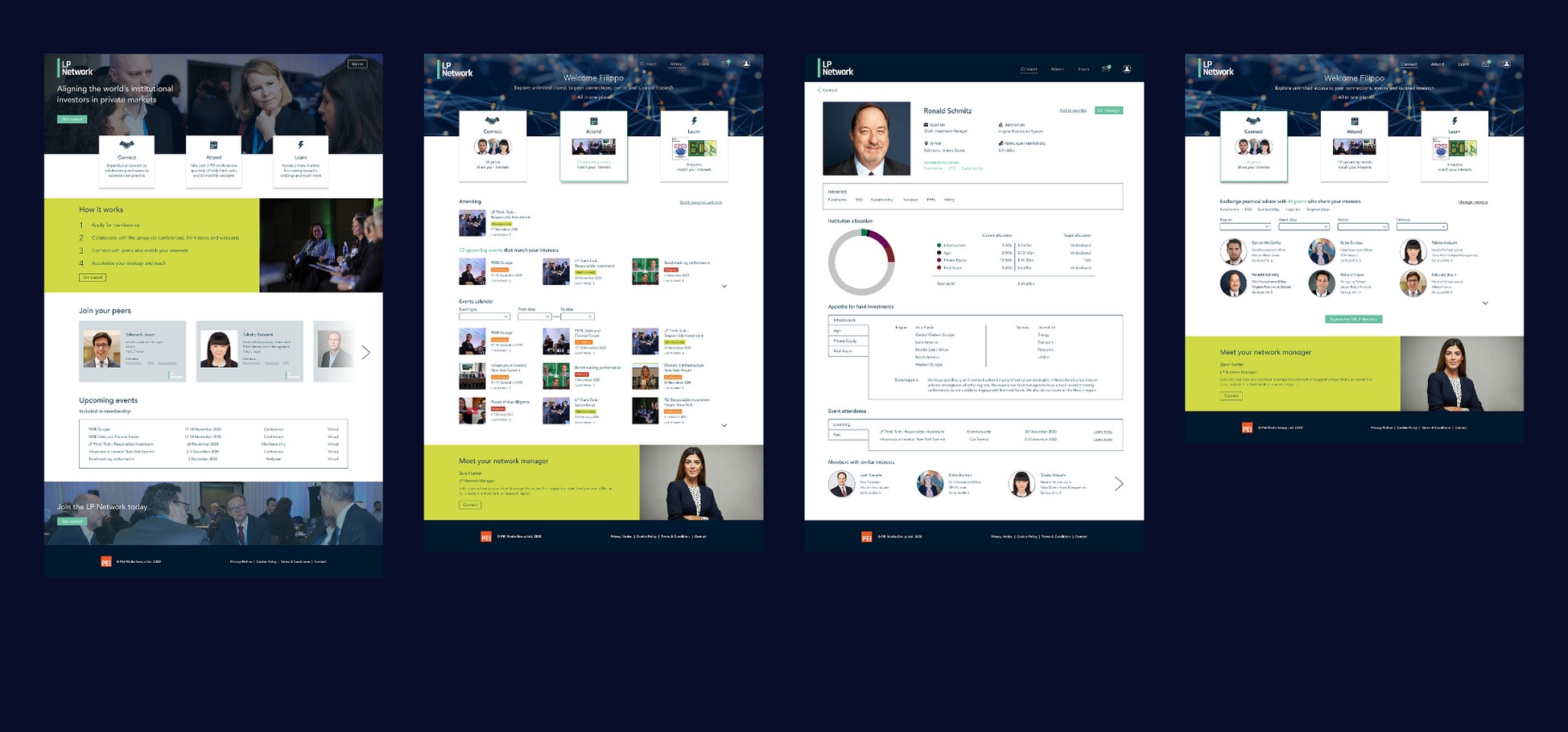
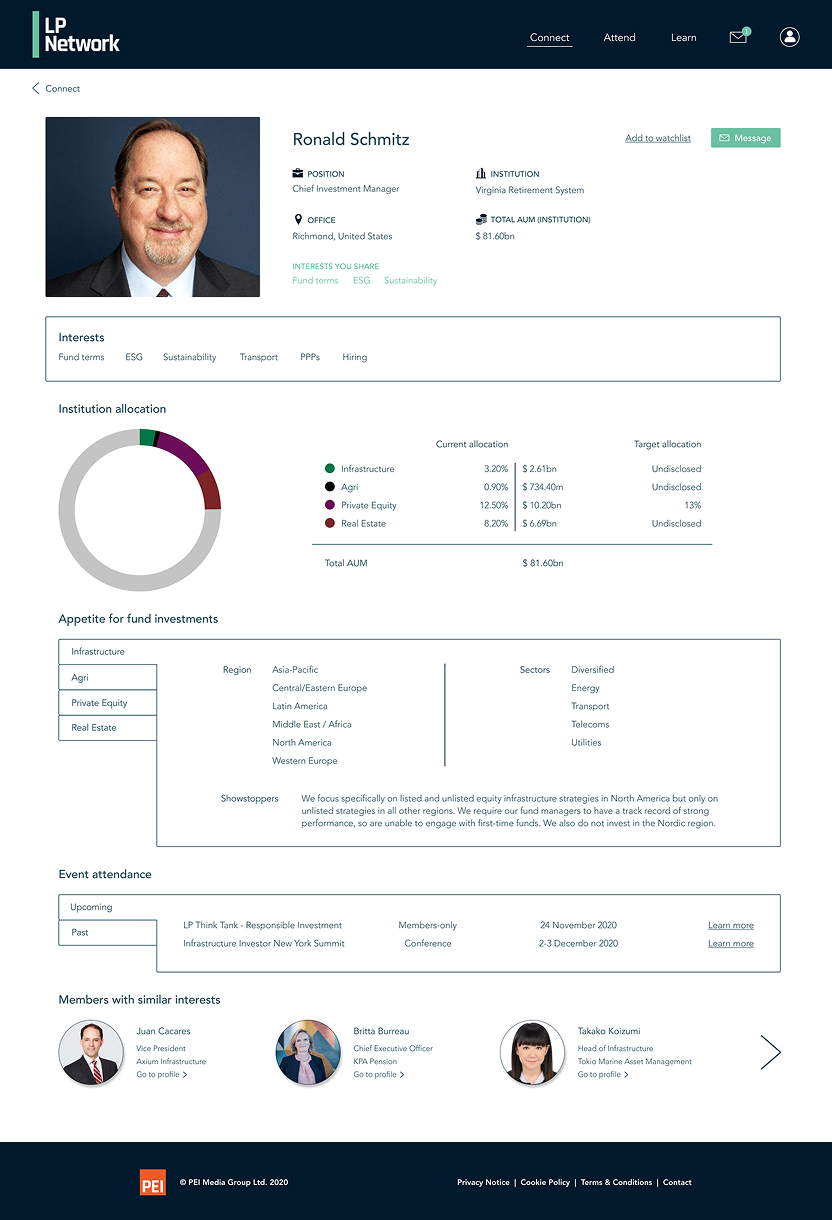
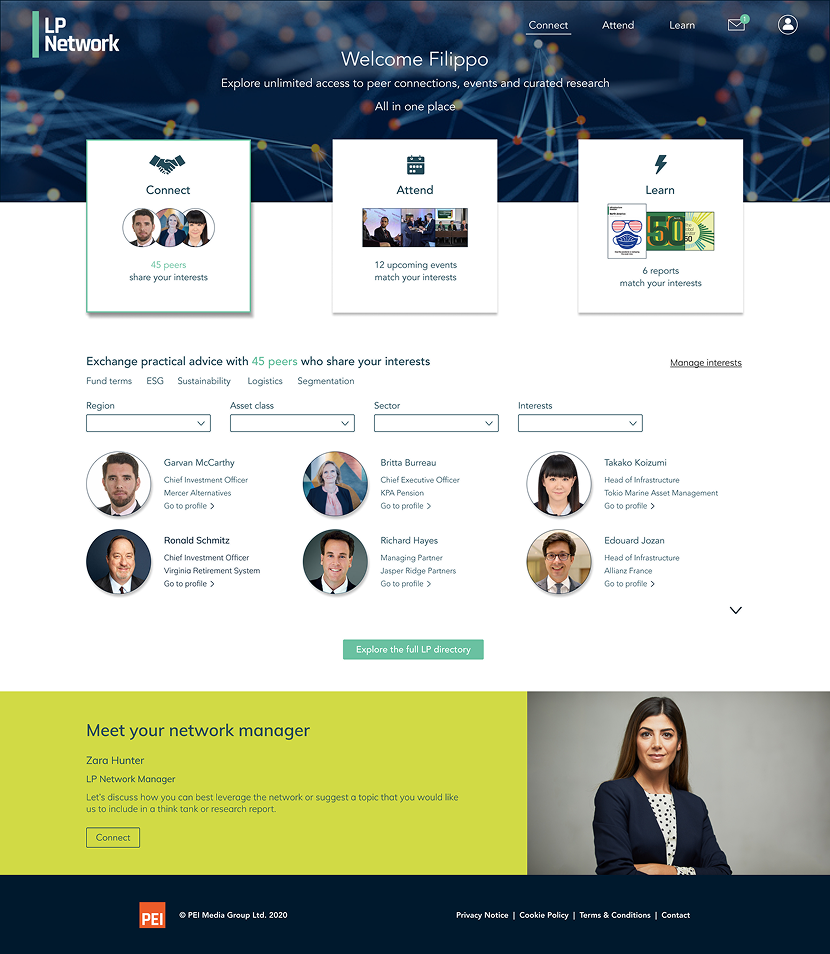
- Build an interactive prototype to validate ideas with real customers.
Process


We brainstormed with the product team over Miro and Zoom, first starting broadly and then whittling our ideas down to a core set of features. We went through multiple iterations of sketching and low-fidelity wireframes until we developed a user journey that addressed core user needs and business capabilities.
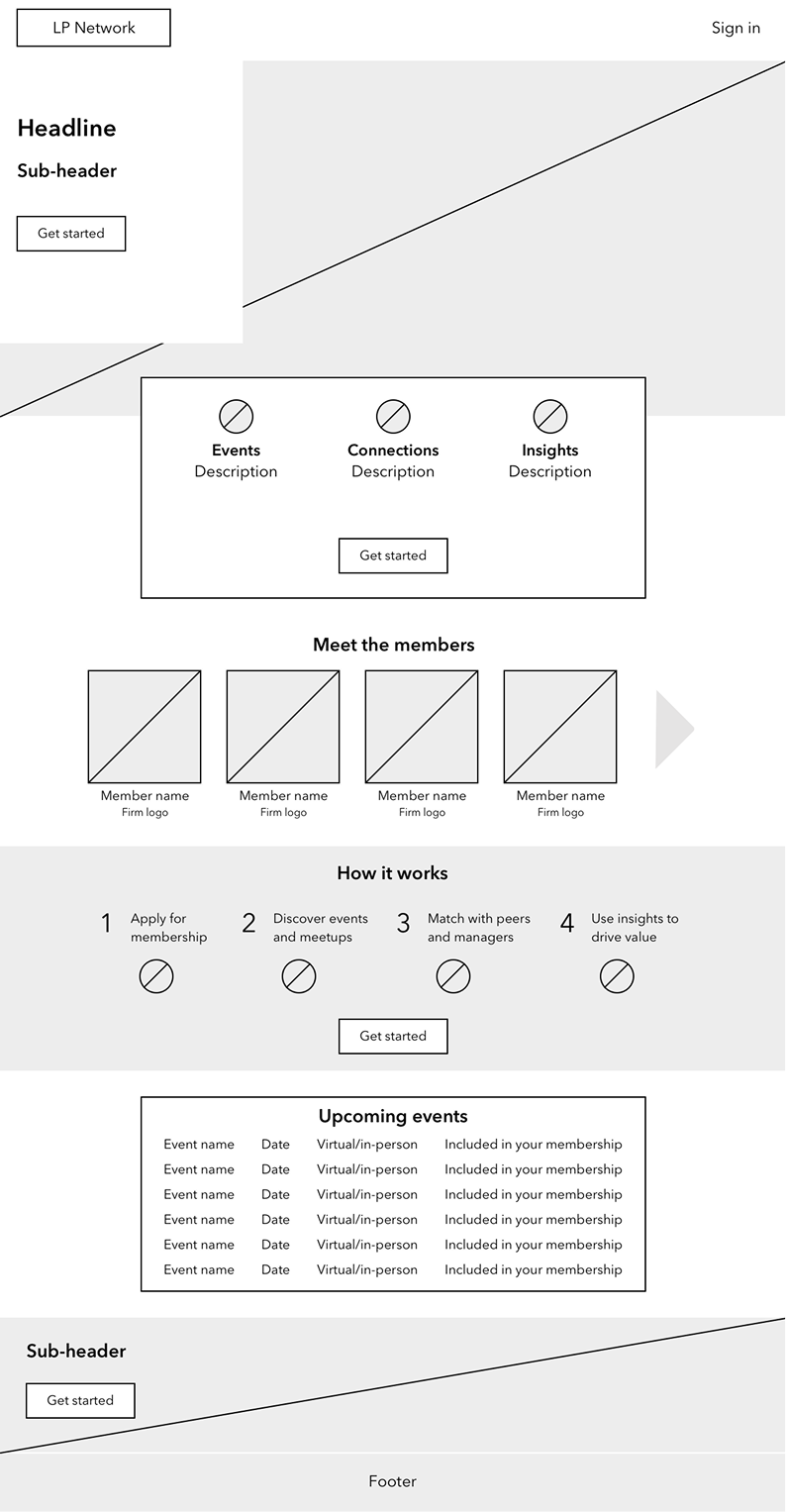
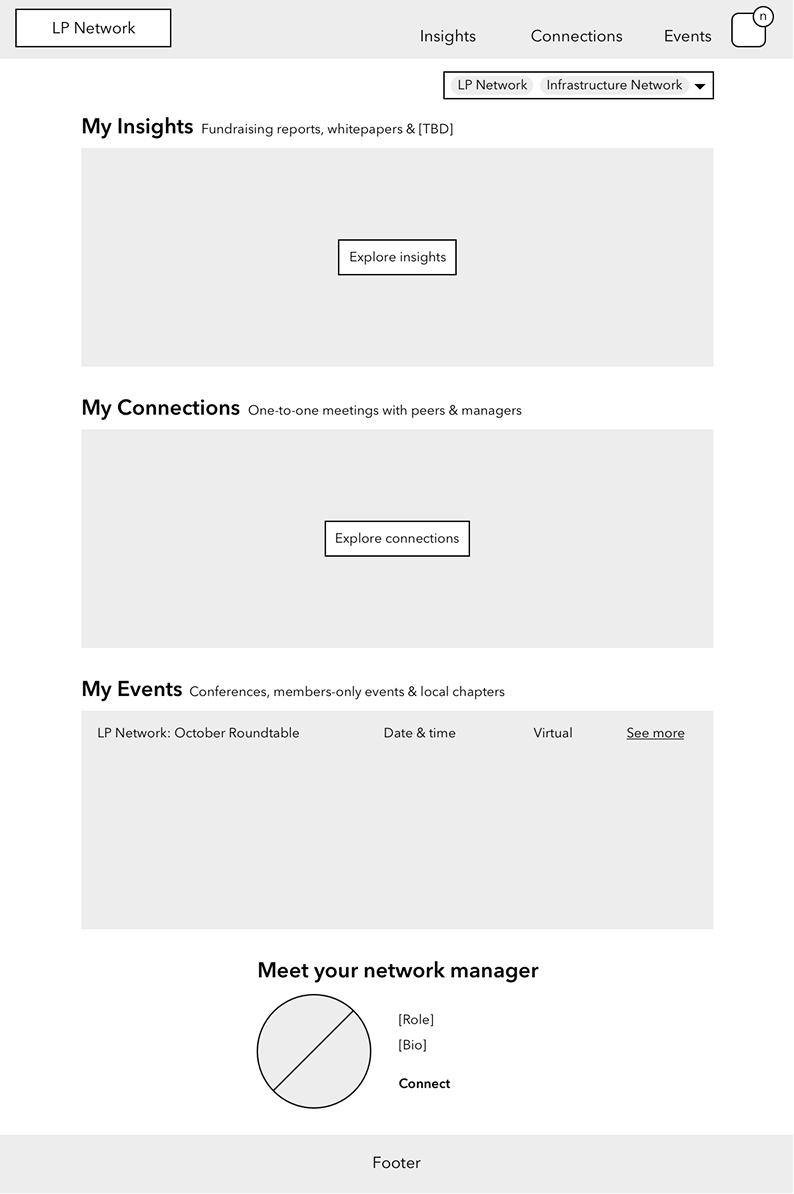
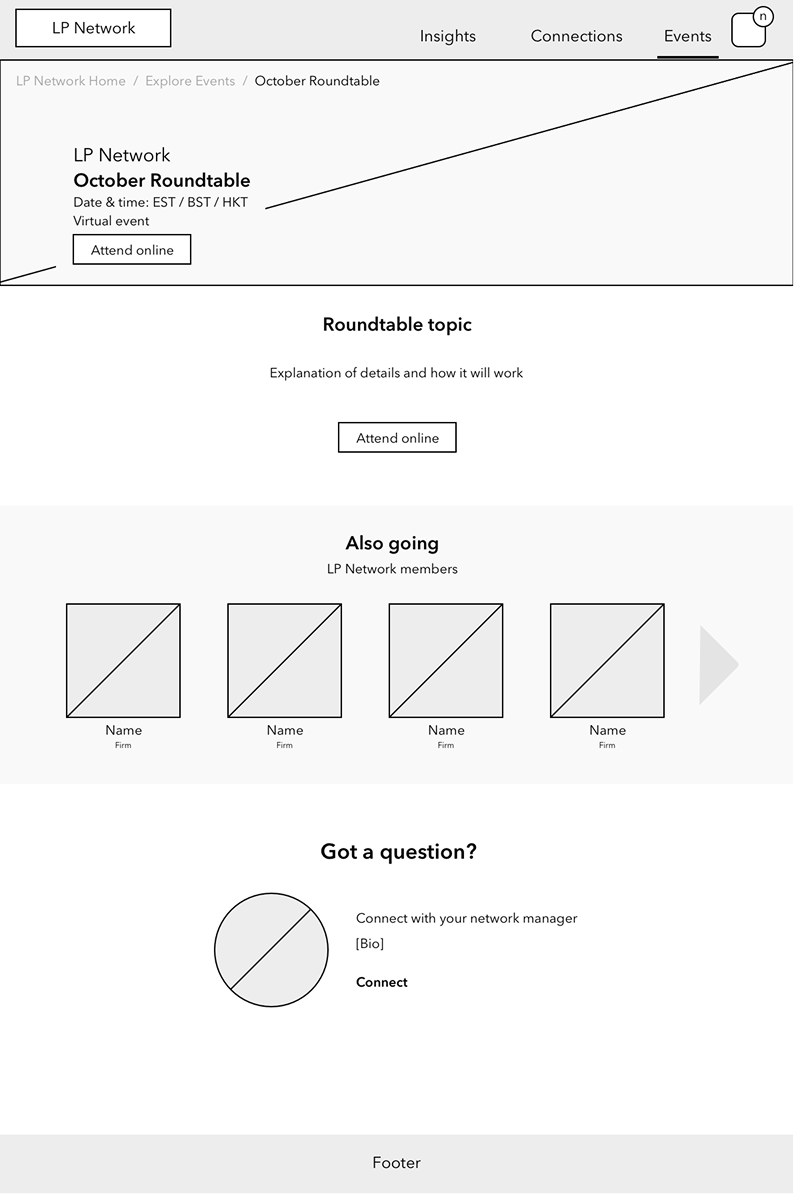
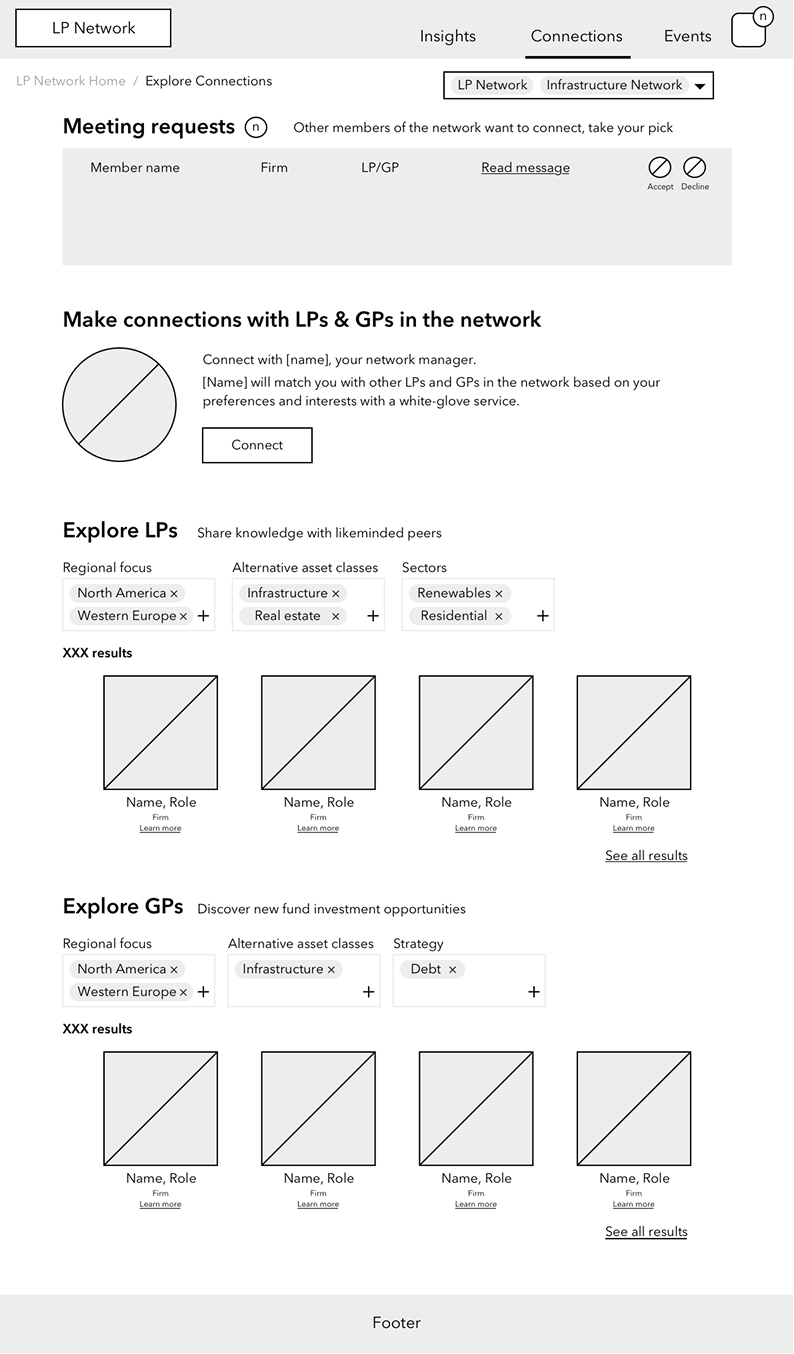
I developed this into a prototype, ready to test with 21 customers if it could help them achieve the jobs-to-be-done they'd expect from the in-person conferences (7 customers from each key segment).
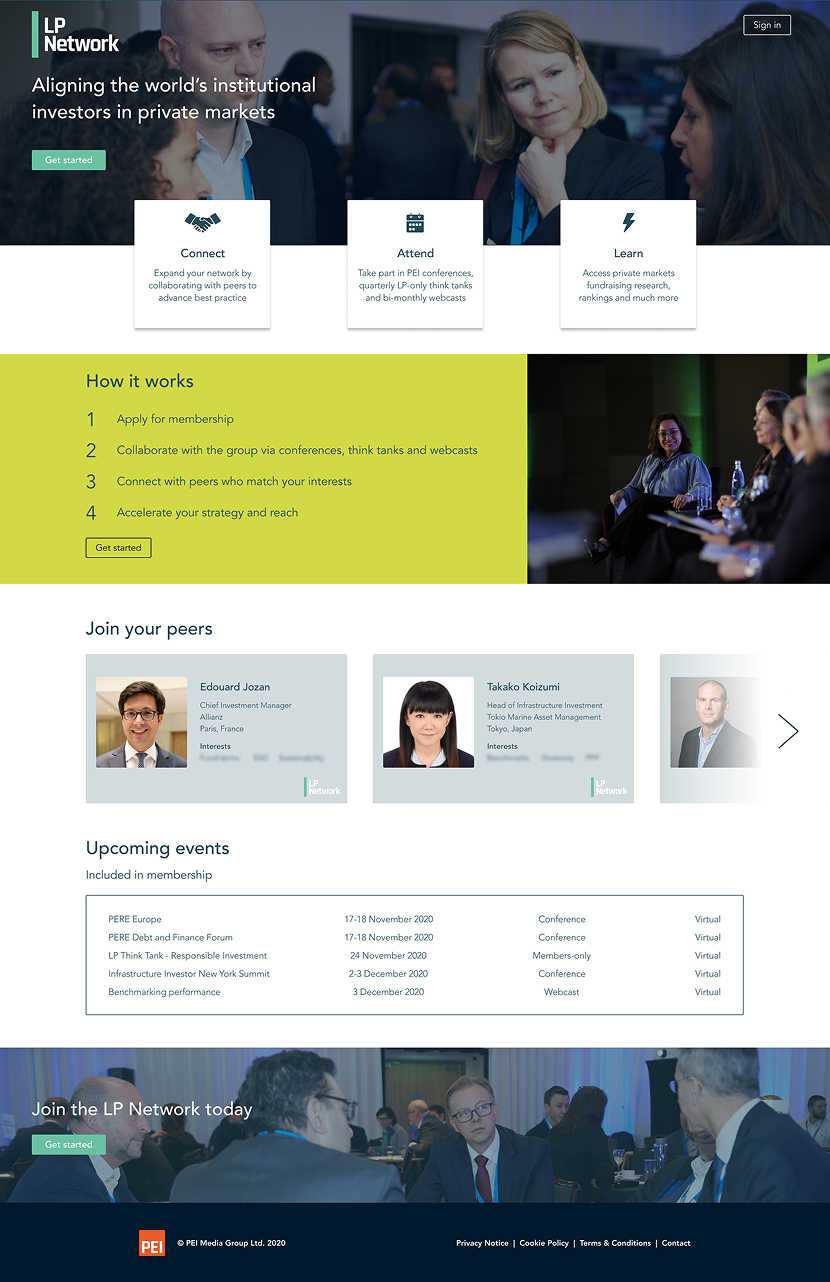
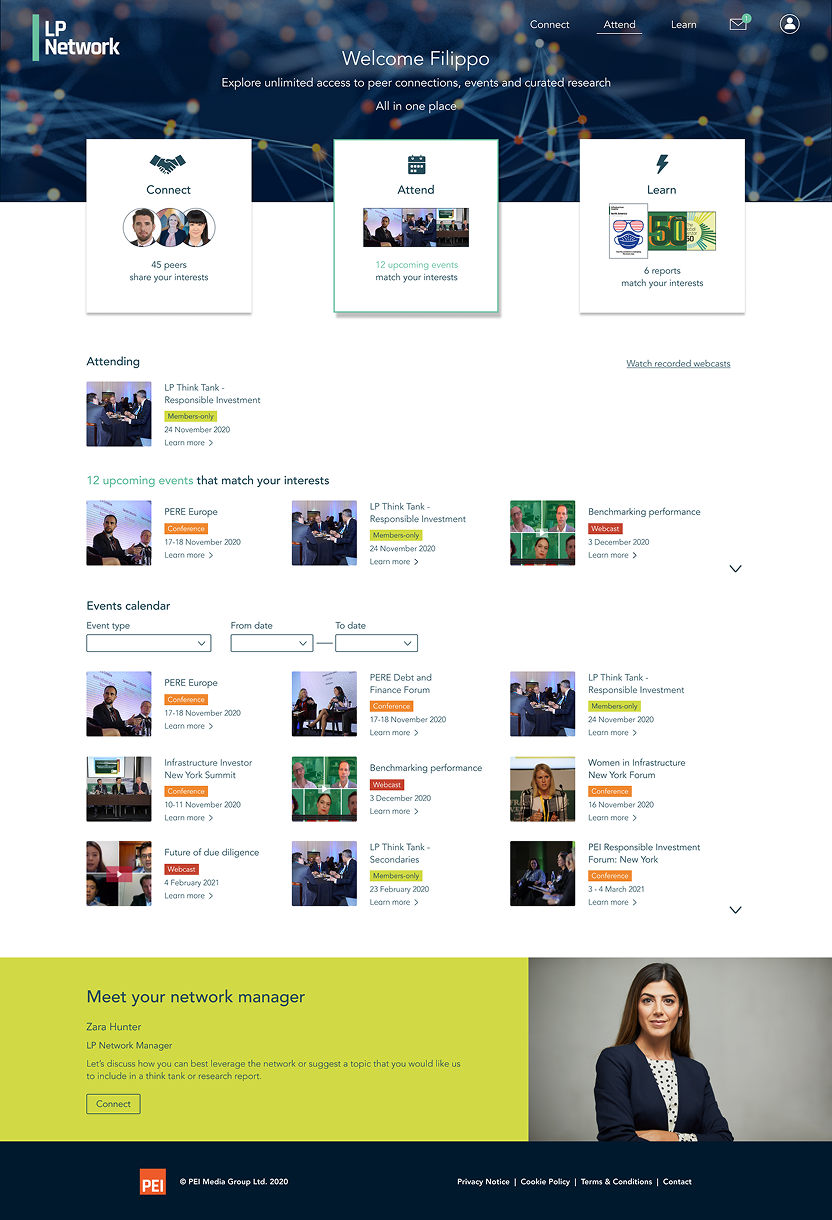
Impact of this project
- My research found that whilst LPs would value connections and access to events, it was not enough to deliver must-have value
- The memberships model itself showed that it had legs, so we took learnings from this project and applied it to other membership products launched subsequently
- Saved the business significant time and money that they would have normally spent building a product like this without prior validation – we were able to learn and pivot early
- Memberships is still a thriving element of PEI's offering today
Learning opportunities
Sourcing interviewees for a product that did not exist yet
I collaborated with the business intelligence team to identify prospective customers from PEI's other product offerings and gave a year's free access incentive.
Having senior stakeholders listen to my interviews live
Whilst certainly nerve-inducing, it served well to include them from the beginning for insight buy-in later on.
Brand design constraints
Fancy effects and graphics would not have been consistent with PEI's brand or the industry but these constraints forced me to focus on the journey and core use cases.
Change and impact of my work with PEI
- Established the UX function from 0→1
- Shifted the function from providing customer insight to designing new concepts and features with prototyping and good qualitative testing practices
- Built a regular cadence of customer research as a health check on the products (previously done infrequently and ad-hoc)
- Hired and led another user researcher in the team who continued on the good work

Piqued your interest?
Get in touch
Whether you're looking for a new product design/UX team lead or you'd just like some advice on how to improve your conversion, drop me a line!